The Middle East is home to some of the world's oldest cities, remarkable monuments and ancient civilizations. From the rose-red cliffs of Petra in Jordan to the sandstone tombs of AlUla in Saudi Arabia and the historic ruins of Mesopotamia in Iraq, every destination tells a different story.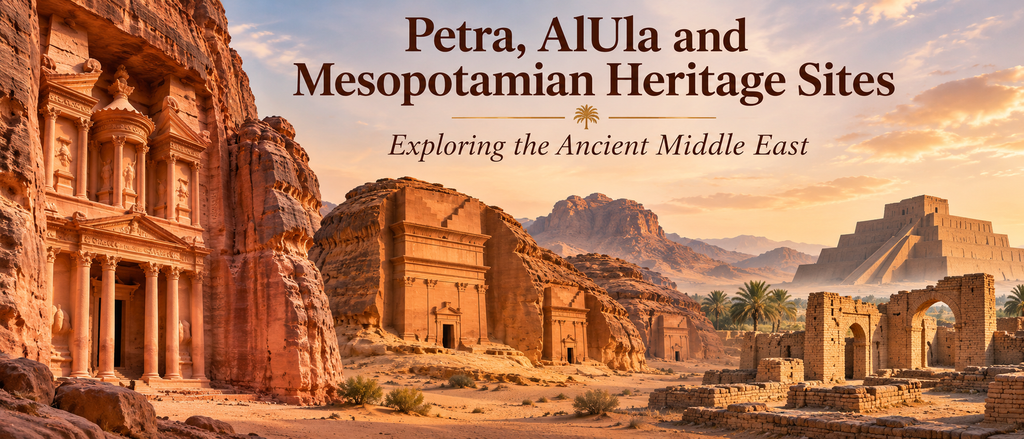
For history lovers, these places offer an opportunity to discover ancient trade routes, impressive architecture and traditions that shaped human civilization.
Petra, Jordan: The Famous Rose-Red City
Petra is one of Jordan's most famous archaeological attractions and a UNESCO World Heritage Site. More than 2,000 years ago, it became an important centre of the Nabataean Kingdom.
Visitors usually enter Petra through the Siq, a narrow passage between towering sandstone cliffs. At the end of this walkway stands Al-Khazneh, commonly called the Treasury, with its beautifully carved stone facade.
Other important attractions include the Royal Tombs, the ancient theatre and the Monastery, also known as Ad Deir.
The Nabataeans developed an impressive water management system that supported life in this dry desert region.
International visitors planning a historical holiday can explore the Jordan Tourist eVisa application details before arranging their journey.
AlUla, Saudi Arabia: Ancient Tombs and Desert Landscapes
AlUla, located in northwestern Saudi Arabia, is becoming an important destination for archaeological tourism. Its dramatic sandstone mountains, ancient settlements and desert scenery attract travellers interested in Arabian history.
The region's most famous attraction is Hegra, also called Mada'in Salih. It became Saudi Arabia's first UNESCO World Heritage Site in 2008.
Hegra contains beautifully decorated Nabataean tombs carved directly into sandstone formations. Their architecture reveals historical connections with Petra.
Visitors can also discover Dadan, an ancient city associated with the Dadanite and Lihyanite kingdoms, and Jabal Ikmah, which preserves fascinating inscriptions carved into rock.
Before travelling, international tourists should check the Saudi Arabia eVisa document requirements and confirm their eligibility.
Mesopotamia, Iraq: Discovering the Birthplace of Ancient Cities
Mesopotamia, located largely within modern-day Iraq, is often described as one of the cradles of civilization. The region between the Tigris and Euphrates rivers witnessed major developments in writing, agriculture, trade and urban life.
Babylon: A Powerful Ancient City
Babylon became one of the most influential cities of ancient Mesopotamia. It is particularly associated with King Hammurabi and, centuries later, Nebuchadnezzar II.
Today, its archaeological remains provide valuable information about Babylonian architecture, religion and political history.
Ur and Uruk: Centres of Early Civilization
Ur is famous for its ancient ziggurat, a monumental stepped religious structure. Uruk played a major role in the development of early cities and writing systems.
These archaeological sites help researchers understand how ancient communities organised their societies.
Travellers researching entry procedures can review the required documents for an Iraq eVisa. However, Iraq currently has significant security risks, and visitors should follow their government's travel advisories before considering a trip.
Best Time to Explore Ancient Middle Eastern Sites
Spring and autumn generally offer more comfortable temperatures for outdoor sightseeing in Jordan and Saudi Arabia.
Comfortable walking shoes, drinking water, sun protection and appropriate clothing are important when visiting desert archaeological locations.
Visitors should also respect protected monuments, follow local regulations and avoid touching fragile carvings.
Why Choose Our eVisa Service?
Visa assistance services can help travellers understand application steps, prepare documents and check forms before submission. Online applications may also provide convenient document uploading and status tracking.
Travellers should confirm service charges, support availability and processing conditions before paying. Visa approval always depends on the relevant immigration authorities.
Conclusion
Petra, AlUla and the ancient cities of Mesopotamia reveal the remarkable achievements of Middle Eastern civilizations. Their carved monuments, archaeological discoveries and historical landscapes continue to inspire people worldwide.
Exploring their history offers a deeper understanding of the cultures and innovations that influenced the modern world. Careful travel planning and responsible tourism help preserve these extraordinary places for future generations.
Comments